
Prosper, Texas · Year-round landscape lighting
Landscape lighting installation in Prosper, planned around the whole arrival.
Looking for a landscape lighting installer in Prosper? Landmark designs and installs year-round outdoor lighting for house uplighting, walkways, trees and garden beds. We are based in Prosper and plan the entry, front elevation and planting as one evening composition.
For everyday evenings. Looking for Christmas lighting?
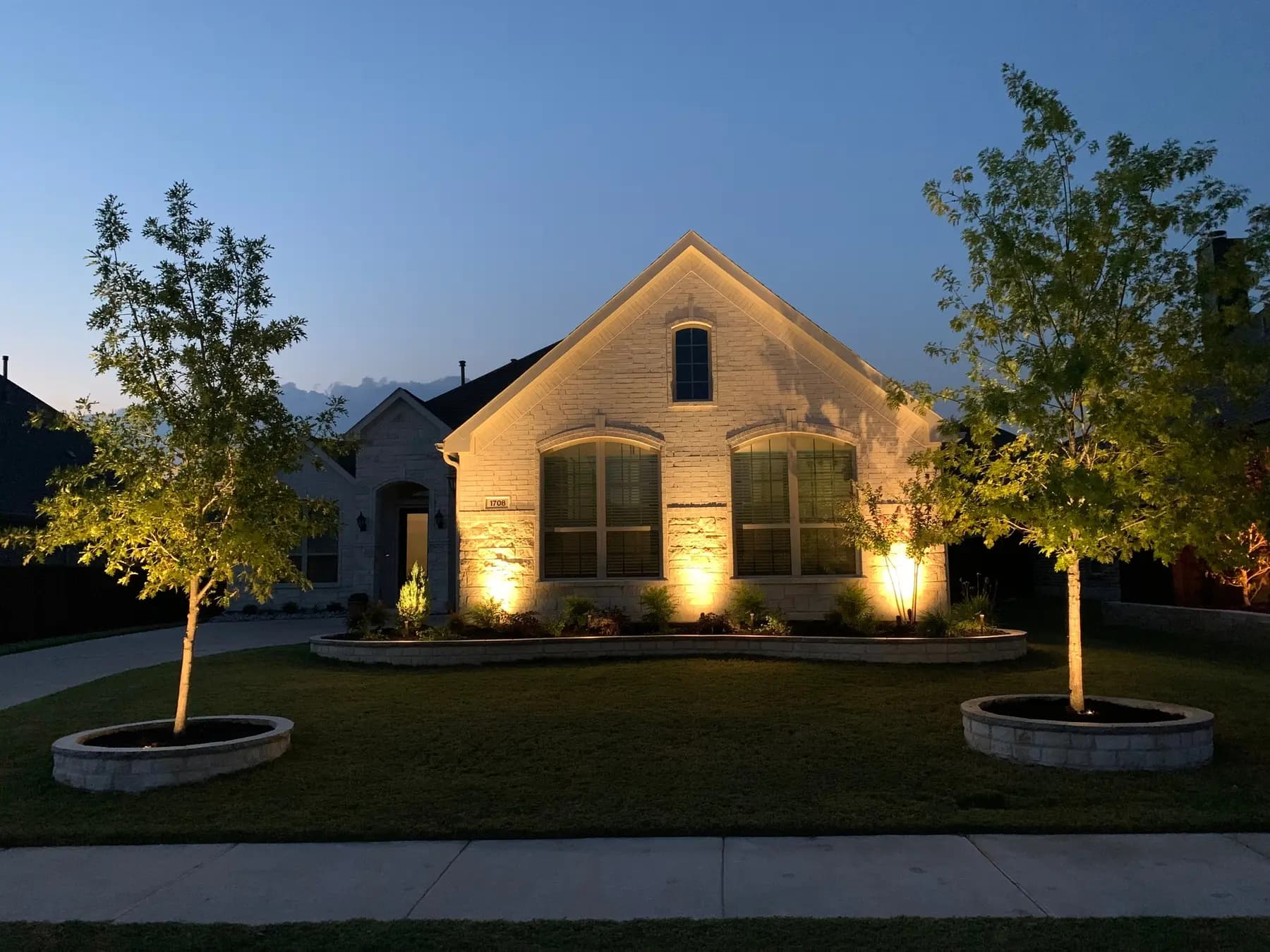
An entry-first plan for a Prosper home.
If the front of the house is the priority, begin with the route from the driveway to the door. Balance the entrance, the main architectural features and a small number of planting accents. This avoids spending the entire budget on walls while leaving the actual arrival difficult to read.
- First priority: the door, the approach and any level changes.
- Second priority: selected stone, brick or columns that give the elevation depth.
- Third priority: a tree or garden focal point that connects the house to the yard.
Planning while the landscape is still growing.
If your Prosper yard has young trees or recently installed shrubs, light the present landscape without crowding its future shape. Tell us which planting is staying and whether beds will expand. Coordinate fixture access with irrigation, stone borders and the way the garden will be maintained.
A lighting-only project can stand on its own.
You do not need a complete landscape redesign to discuss outdoor lighting. Send front-elevation and dusk photos, identify the spaces you want to enjoy after dark and note whether you have existing fixtures. Landmark can evaluate the lighting direction around the property you already have.
Before your Prosper estimate.
Share your address, the view that matters most and any HOA requirements you already have. Ask for the proposed lighting areas, fixture and control choices, installation scope and schedule in writing. Photos shown here are from Landmark’s North Texas gallery and are not presented as a named Prosper case study.
Planning lighting in Prosper?
Do you design and install outdoor lighting in Prosper?
Yes. Landmark designs and installs residential landscape lighting in Prosper, including architectural uplighting, walkway lighting and tree or planting accents. Share your priorities and property photos to request an installation estimate; fixtures, controls, pricing and timing are confirmed in the proposal.
Is Landmark based in Prosper?
Yes. The site lists Landmark Landscape Services, LLC in Prosper, Texas 75078, serving Prosper and nearby North Texas cities. Call 469-492-8450 to discuss your property.
Can you add uplighting to my existing front beds?
Yes, existing beds and architecture can be evaluated. Growth, access, power and the view from the house all influence fixture placement.
Are seasonal Christmas lights included?
No. This estimate is for everyday landscape lighting. Landmark has a separate Christmas lighting service for seasonal displays; specify which project you need.
One Prosper-based team. Five communities.
Landmark serves residential properties in Prosper, Celina, Frisco, McKinney and The Colony. Select your city for a useful starting point, then tell us about your own property.
- Prosper lighting
- Celina lighting
- Frisco lighting
- McKinney lighting
- The Colony lighting
Planning planting or paths at the same time? Explore Landmark’s landscaping services in Prosper.
Show us where the evening disappears.
Share your city, a few photos and the areas you want to enjoy after dark. Landmark will confirm project scope, pricing and availability with you.