Standing-water assessment
We look for low areas, compacted soil, blocked flow, downspout concentration and grading conditions that contribute to repeated wet spots.

Yard drainage solutions · Prosper, Texas
Standing water, soggy side yards and washed-out beds can keep a beautiful property from feeling usable. Landmark evaluates how water moves, then builds the drainage solution into the landscape.
The opportunity
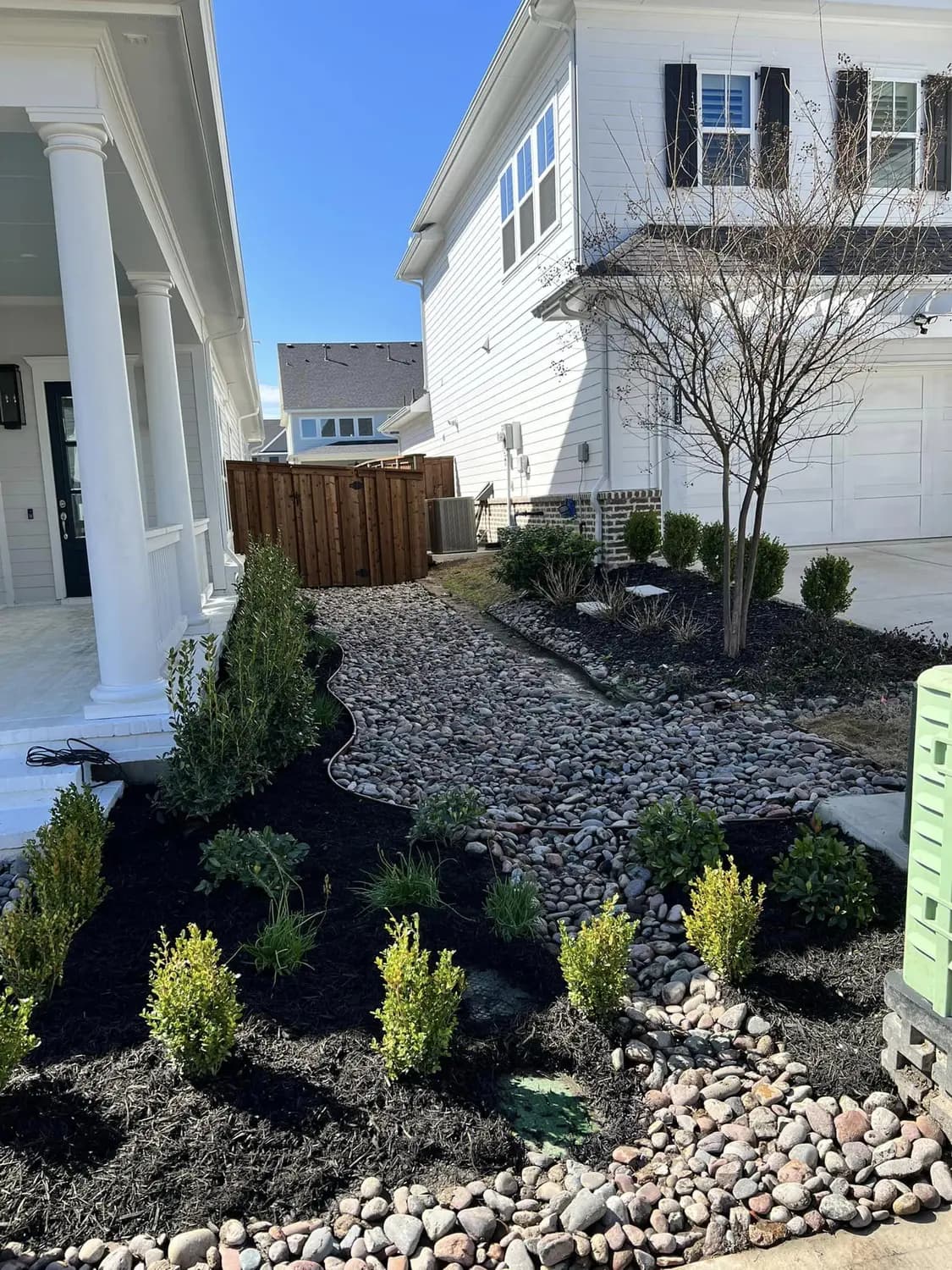
Runoff can leave muddy grass, stressed plants, eroded beds and water collecting near patios or the home. The right answer depends on slope, soil, roof runoff, neighboring grades and where water can discharge safely. That is why the first step is understanding the path—not prescribing one drain for every yard.
We look for low areas, compacted soil, blocked flow, downspout concentration and grading conditions that contribute to repeated wet spots.
A subsurface collection system may be appropriate where water lingers in turf, along fence lines or beside landscape beds.
Catch basins, channel drains or other surface solutions may help collect concentrated runoff before it spreads.
Roof water can sometimes be carried through underground connections toward an appropriate discharge point away from problem areas.
What changes
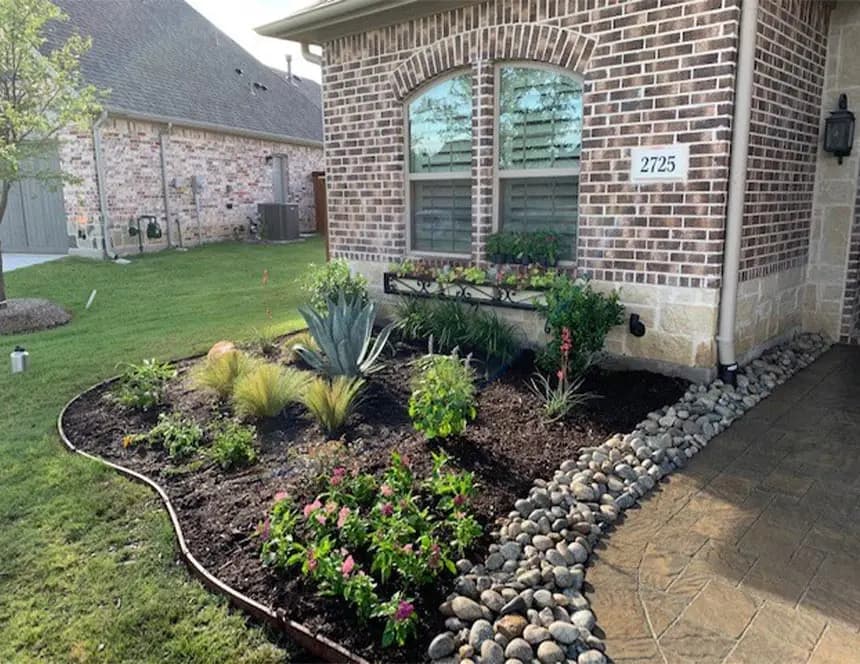
A drainage plan should solve the water problem while respecting the landscape above it. Final solutions may combine drainage components, selective grading, river rock or restored beds and turf based on the property.
Drainage solutions in Prosper
Prosper’s clay-heavy soil, concentrated roof runoff and narrow spaces between newer homes can leave soggy side yards and standing water after storms. A site-specific drainage plan starts by identifying where the water enters, collects and can discharge safely.
Subsurface French drains and surface catch basins solve different problems. The right system depends on soil saturation, low points, runoff volume and the available route to an appropriate outlet.
Roof runoff can overwhelm a small planting bed or side yard. Underground downspout connections may help carry that concentrated water away from recurring problem areas.
Selective grading, rock channels, turf repair and planting-bed restoration can be coordinated with drainage components so the completed solution works without leaving the yard looking excavated.
A clear way forward
You do not need the technical answer before you call. Start with what you see and how you want the property to feel.
We start with the visible symptoms and follow grade, runoff and collection points across the property.
The recommendation is based on the yard’s conditions and may use one method or a coordinated combination.
After installation, disturbed areas are finished so the drainage solution supports the yard instead of looking added on.
Useful before you call
No. A French drain is one option. The correct solution may instead involve surface collection, downspout routing, grading or a combination depending on how water enters and leaves the area.
Common contributors include narrow spacing between homes, clay-heavy soil, concentrated roof runoff, settled grades and limited surface slope.
Drainage installation temporarily disturbs part of the property, but the route and restoration can be planned to protect important features and leave a finished result.
Yes. Addressing drainage before new beds, turf or pathways are installed can protect the larger investment and produce a more cohesive result.
Begin with the property you have
Tell Landmark what is not working, what you are imagining and where you live. We'll help define a practical next step.